

Most Camden practices lose enquiries because their profile, website and service descriptions disagree about what the firm does.
Local SEO for professional services in Camden starts with accurate local information, specific service pages and measurable enquiries. For solicitors, accountants and consultants, three decisions carry more weight than a longer list of neighbourhood names: whether service-area claims match where the practice operates, whether review requests stay within the CMA's rules on fake and incentivised reviews, and whether the contract scope covers the work being quoted. A profile listing a service the firm does not offer, or an incentivised review trail, can cost a practice more than the visibility it buys.
Five Local Signals to Fix First in Camden
Local SEO priorities for a Camden professional practice
| Priority | What It Controls | First Check |
|---|---|---|
| 1. Google Business Profile | Category, services, hours and map presence | Primary category matches your main service and details match your website |
| 2. Service pages | Which specific searches your firm can realistically target | One page per defined service, explaining eligibility, process or fees and a clear next step |
| 3. Citations and council directory | Consistency of business details across the web | Name, address or service-area description, phone number, website and category match on Shop Local and other listings |
| 4. Reviews | Trust and enquiry conversion | Requests follow a compliant process and are never incentivised |
| 5. Enquiry tracking | Whether visibility produces calls, forms and bookings | Calls, form submissions and booked consultations are recorded separately from rankings |
Profile accuracy before extra content
Check that the primary profile category describes the practice's main work, rather than an occasional service. The services list should reflect work clients can buy, while opening hours and the contact number should match the arrangements for handling enquiries.
Only list an office where the practice operates. Present a Camden address only when the practice works from it and the address meets the applicable profile requirements. A practice that covers Camden without qualifying premises should describe that coverage instead, and confirm it is eligible for a service-area profile before changing its address settings.
Adding neighbourhood names will not fix a mismatch between the profile, the website and the service on offer. A detailed employment-law page serves a relevant prospect better than a general page mentioning every part of the borough.
Consistency beyond the profile
Camden Council's Shop Local service uses MyVirtualNeighbourhood to help residents discover businesses by neighbourhood, and businesses can submit themselves if they aren't listed. Check the business name, address or service-area description, telephone number, website and category before submitting.
A citation is a reference to a business's details elsewhere online. The purpose is to keep accurate information on the listings clients check, so correct and prune existing entries rather than chasing volume.
For a plain-language explanation of how website improvements fit together, the SEO guide from Digital Souls Studios, published by Digital Souls Studios LTD, provides useful background.
Practical test: Search the main service alongside Camden and a relevant neighbourhood, such as Bloomsbury. Compare how the visible practices describe that service with what the practice's own profile and website say.
Define Your Requirements Before You Compare Providers
A useful proposal starts with decisions about the business: which services to prioritise, where clients come from and what a good enquiry looks like. Camden's Inclusive Growth Report describes more than 90% of professional and creative businesses as small or micro-businesses, which supports a focused approach built around specialisms rather than indiscriminate borough-wide coverage.
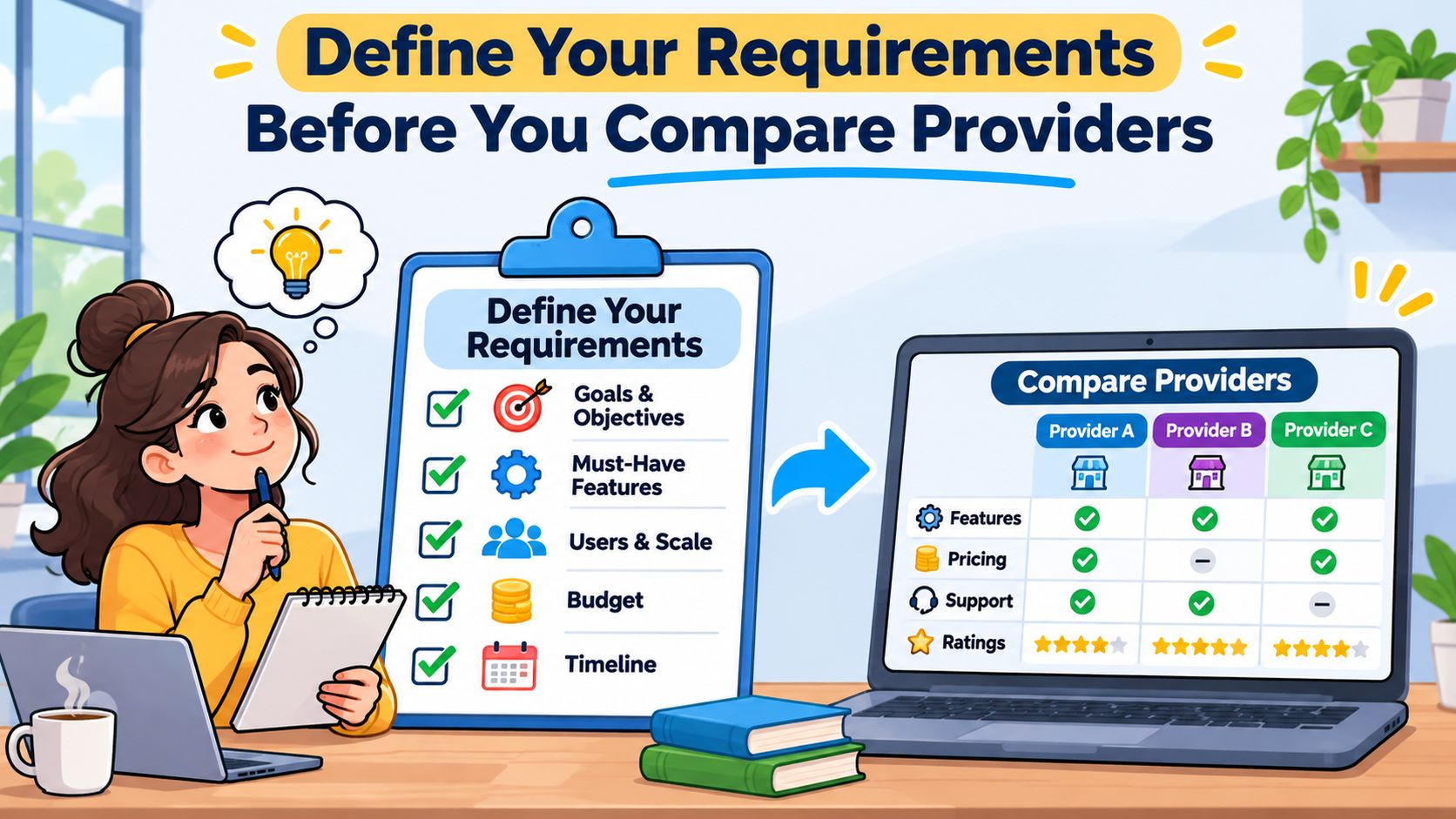
Questions to answer before a sales call
- Which work matters most? Rank services by commercial value, capacity and suitability. The first page shouldn't attract work the practice would rather decline.
- What problem does each service solve? Lease advice for landlords or tax support for independent consultants gives the page a clearer purpose than a broad professional-services label.
- Who travels to whom? A solicitor seeing clients at a Camden office scopes a campaign differently from a consultant who covers several boroughs. Answer this before anyone quotes a figure.
- How broad should the campaign be? A first local campaign centred on one specialism is a different scope from a competitive push across several service lines, so ask providers to price both ends of that range.
- What counts as a useful outcome? Define a qualified call, enquiry form and consultation booking, including the unsuitable enquiries that should be excluded.
- Who controls delivery? Decide who retains business-account access, who approves professional advice and who has capacity to draft or review content.
For a clearly hypothetical example, a three-solicitor employment practice might begin with one service page focused on employer advice in one neighbourhood. That is a more manageable starting point than commissioning pages across the borough before testing demand.
If a website move forms part of the project, reviewing how RedirHub compares redirect tools can help frame questions about redirect requirements. Redirects send visitors from an old page address to its replacement; they shouldn't become an unexplained extra.
Finish with a short written brief sent unchanged to every provider. Set out the priority services, the places the practice can realistically serve, the outcome definitions above and who controls access and sign-off. Comparable inputs make proposals easier to judge; vague briefs produce quotes that cannot be compared like for like.
Vet a Provider's SEO and Technical Skills
| Skill area | Question to ask | Strong answer sounds like |
|---|---|---|
| Technical SEO | How are crawling, indexing and page speed checked on a small service website? | Names specific checks and explains how fixes are prioritised |
| Keywords and search intent | How are services and customer questions mapped to searches? | Describes customer research, competitor gap review and page mapping |
| On-page optimisation | How will titles, headings and internal links support enquiries? | Links each page to a clear enquiry route |
| Content and topic planning | How are pages selected for writing? | Ties content to commercial problems rather than lists of place names |
| Authority and relevant links | How are links earned without buying them? | Describes relevant outreach and useful assets, with no promised positions |
| Measurement and reporting | Which metrics show enquiries rather than only rankings? | Tracks calls, forms and bookings alongside rankings |
| Google Business Profile rules | How is the profile kept within Google's guidelines? | Refers to Google's official Business Profile guidance |
Translate technical language into checks
Of the areas in the table, probe technical SEO first. Crawling and indexing faults can make every later improvement invisible, so a provider who cannot explain them plainly is a risk however polished the keyword plan appears. Profile compliance is an additional local check, not a replacement for website work.
Crawling is how search engines discover pages. Indexing is how they store pages for potential inclusion in results, while page speed affects the experience of using the site.
A credible technical explanation identifies blocked pages, broken links, duplicate page versions and slow-loading elements, then separates urgent problems from minor improvements. It shouldn't turn every warning into a paid emergency.
Search intent means the purpose behind a search. Someone researching dismissal procedures needs different information from an employer ready to appoint a solicitor, even when both searches concern employment law. Camden's professional sector is dominated by small and micro-practices, so a proposal built around large volumes of pages may exceed what a partner can realistically review and approve.
Look for judgement rather than jargon
Legal practices can find attorney marketing insights from CitationOS as supplementary reading, while keeping the proposed work grounded in the practice's actual services and UK obligations.
Watch for these warning signs:
- Urgency inflation: Every minor finding presented as a paid emergency.
- Unmeasured outcomes: Reports with no explanation of how enquiries are identified.
- Purchased authority: Bulk-bought links sold as a shortcut to credibility.
- Manufactured reviews: Reviews offered as a deliverable or written by the agency.
- Opaque delivery: Reluctance to explain changes in plain English.
Ask for a written explanation of a page the provider would rewrite during the opening month. A useful answer identifies the page, the client question it fails to answer, the proposed change and the measure used to assess it.
A specific explanation of a modest improvement is stronger evidence of capability than a long list of technical terms.
Judge Case Studies and Local Evidence
A case study should explain what changed, what was measured and over what period. Similar business size and sector matter because an established national website presents different challenges from a small Camden practice.
Apply an evidence filter
- Specific work: Does the example identify pages, profile changes or technical fixes?
- Named measures: Does it distinguish calls and qualified enquiries from visits and rankings?
- Verifiable context: Can the client's existence be confirmed, or is there a credible explanation for anonymisation?
When a UK-wide project is presented as London evidence, establish which work and outcomes were local. A London address on a presentation doesn't establish Camden expertise.
Hypothetical comparison: A Camden estate agency receives competing proposals. Provider A shows rising calls over six months but doesn't identify the pages changed or explain the call records. Provider B supplies two anonymised examples describing page revisions and how calls were attributed.
Provider B offers stronger evidence of its method, despite presenting fewer headline numbers. Anonymisation can protect confidentiality, but it doesn't remove the need for a coherent explanation.
Photographs, testimonials and client logos need permission and context. An attractive presentation isn't proof that the agency performed the work being claimed.
Evidence question: What would change on the practice's site first, and why?
A strong answer connects a named page to a commercial problem and a measurable action. It also acknowledges what cannot be established without access to the site's records.
Collect Reviews Without Breaking the Rules
In January 2025, the Competition and Markets Authority announced that Google had agreed to strengthen detection and enforcement against fake reviews, covering reviews and star ratings in Google Search and Google Maps.
Suspicious activity can lead to a prominent warning alert, blocked new reviews, removed reviews or action against businesses that artificially boost ratings. Treat review acquisition as a controlled client-communication process and set no volume target. For a Camden solicitor, accountant or consultant, that means fitting requests around matter closure, professional duties and service-area accuracy. A review that names the wrong office, location or service can create avoidable confusion, especially for small and micro-practices serving specific streets and boroughs.

A defensible review workflow
- Use genuine relationships. Request feedback after a completed matter or suitable milestone, subject to professional obligations.
- Keep the invitation neutral. Provide a review link without prescribing a rating or wording.
- Avoid satisfaction screening. Never make the invitation conditional on the client being happy.
- Exclude incentives and staff reviews. Offer no money, gifts or discounts for reviews.
- Protect confidentiality. Don't disclose a client's identity, matter or outcome without permission. Reply in general terms, including when responding to criticism.
- Retain an appropriate record. Keep proportionate evidence of the relationship and invitation, with access restricted appropriately.
- Separate case insights. Publish properly anonymised case material separately from third-party reviews, checking that details don't identify the client.
GOV.UK's reviews and endorsements guidance says businesses must not pretend to be customers, commission fake reviews or offer incentives for positive reviews. Review copy should therefore stay in the reviewer's control. A practice can ask for honest feedback and make the process easy. It should not script the answer, select only happy clients or trade any benefit for a rating.
Hypothetical example: A Camden accountancy with a dozen reviews receives five five-star reviews in one week. That pattern alone doesn't establish wrongdoing, but the sensible response is to audit how each review was requested and pause further invitations until the trail is clear. Keep the audit practical: confirm the client relationship, check the invitation wording, record any permission issues and review whether the profile, service pages and stated service area match what those reviews describe.
Pricing, Contracts and Ongoing Maintenance
Google Ranker Pro's Local SEO plan costs £747 per month at the 2026 monthly guide rate and is designed for local service businesses. The monthly figure only becomes meaningful once you set it against the work defined in the agreement.
Local SEO plan inclusions at the 2026 monthly guide rate
| Item | Included in plan |
|---|---|
| Monthly guide rate | £747 per month |
| Google Business Profile optimisation | Included |
| Target keywords | Up to 10 |
| On-page optimisation | 5 pages |
| Local citations and directory work | Included |
| SEO blog posts | 2 per month |
| Monthly ranking report | Included |
| Google Ads and Meta Ads | Not included; separately scoped with a management fee and media budget |
Paid advertising sits outside SEO plan prices. Its management fee and media budget need a separately agreed scope, so an advertising line on a proposal should never be read as covering spend.
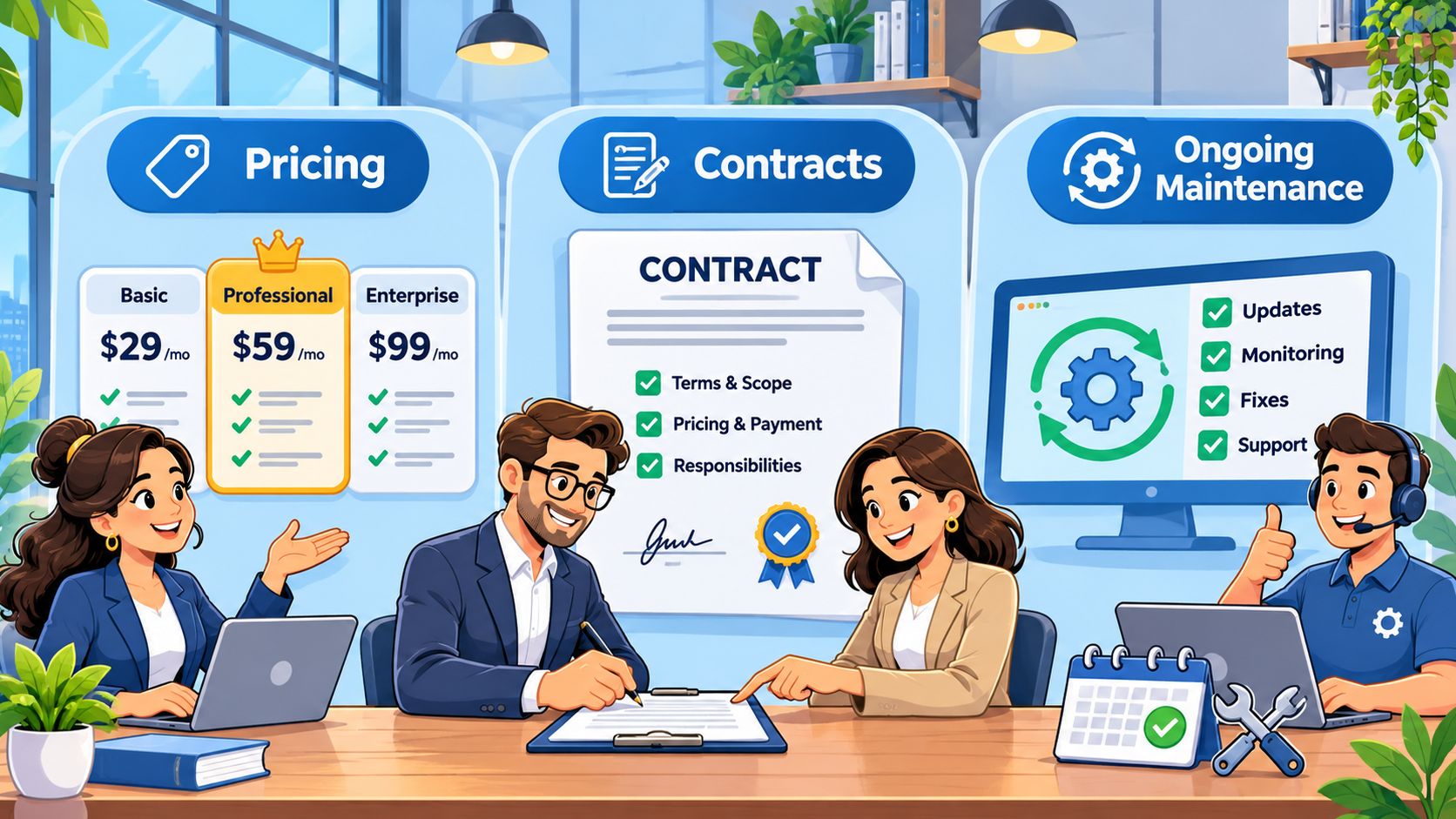
Put the boundaries in writing
- Scope and page count: Distinguish revisions to existing pages from newly written pages, and define approval responsibilities.
- Work after setup: Establish what continues once initial corrections are complete.
- Notice period: Record cancellation terms, renewal arrangements and handover obligations.
- Account ownership: The practice should retain ownership of its profile and website accounts, with appropriate delegated access.
- Reporting: Specify how enquiry evidence will accompany ranking reports where that measurement is agreed.
- Exclusions: Identify development, photography, specialist legal review and other work that isn't included.
Where consultation bookings run through a separate system or a reception team, agree in advance how those bookings will be counted and attributed, and who supplies the underlying records.
Budget for ongoing maintenance
A monthly maintenance routine should cover profile changes, inconsistent listings, new reviews, service-page updates and enquiry records. Require a dated record of completed work so routine monitoring doesn't turn into an unexplained recurring charge.
Allow several months for assessment rather than expecting immediate visibility. Set a six-month review point as a planning milestone, then weigh the completed work against the quality of the enquiries the practice has received.
Localised Checklist for London Businesses
A practice serving Camden, Islington and Westminster needs a market structure, not interchangeable borough pages. The Office for National Statistics' Camden profile places the borough in a high-services local-authority cluster. That makes the intended client and service easier to define before pages are commissioned.
Check the market behind each page
- Match the client type. A solicitor, accountant or consultant should see language that fits the problem they bring to the practice. Startups may need clear packages and timelines. Property businesses may need lease answers, while restaurant operators may need licensing guidance, only where the practice has genuine expertise.
- Give service pages a reason to exist. Each page should explain the work, the people involved, the process and the evidence a client can reasonably expect. A page that changes only the borough name gives readers little reason to choose that practice.
- Review localised pages on a set cycle. Use an internal six-month check for fees, eligibility, personnel and contact details. This matters in professional services, where advice, team structures and regulatory wording can change while old pages remain visible.
- Keep review and service-area decisions aligned. Review wording should stay within the rules for the practice. Service-area wording should describe where work is delivered, without implying an office in every neighbourhood mentioned.
Decide whether another borough page is justified
A separate page is useful when it answers a distinct client need or explains a different service arrangement. It is weak when the only change is the borough name.
For example, a landlord lease-advice page can explain documents required, the consultation process and relevant experience. It does not need duplicate versions for every neighbouring borough if the advice and delivery are identical. That trade-off matters for Camden's many small and micro-businesses, where a clear page on one service can outperform a thin spread of near-identical location pages.
Build pages around reasons to choose the service, not merely places where the practice would welcome enquiries.
Request a Free Audit Before You Sign
What should a free audit show before a practice commits? Done properly, it tests the proposed approach against the practice's real website and Business Profile, rather than a polished sales deck.
Define a useful audit output
- Profile and listing findings: Flag inaccurate details, unclear services and questionable location claims, and check the Shop Local listing against the Google Business Profile.
- Page priorities: Name the service pages needing clearer expertise, process information or enquiry routes for Camden's small and micro-business clients.
- Scope and access: State what access the audit needs and where the free review ends, so the paid scope is plain before contracts are discussed.
The findings should separate urgent corrections from optional improvements and note where more access is needed. An audit that predicts rankings, promises citations in AI answers or turns every observation into a case for a bigger package is a sales pitch.
The provider should explain how progress will be assessed once work begins. I would treat a clear answer as a condition of signing.
Google Ranker Pro offers Local SEO, Google Business Profile optimisation and service-page improvements for practices targeting Camden clients. Request a free SEO audit or discuss campaign requirements, or visit Google Ranker Pro to explore the available services before agreeing a scope.