
GOOGLE RANKER PRO / INSIGHTS
How to Measure SEO Leads in GA4: 7 Methods for UK Firms
Learn how to measure SEO leads in GA4 with seven practical methods for UK small businesses, from key events and call tracking to CRM values.
The organic traffic line is up. A phone rings, a form arrives, and a quote goes out. At the monthly meeting, nobody can say whether organic search led to that work. The report shows sessions, the sales team shows invoices, and the figures remain disconnected.
That gap can waste budget in either direction. Loose measurement can keep funding pages that attract readers but few buyers. Overly detailed tracking can produce a dashboard no one uses. Start with a practical definition of an enquiry, then assess each measure against the records your business already keeps.
The seven measures below are ranked by how closely they connect to a real enquiry, from early signs of interest to recorded lead value. Together, they show what each figure can establish and what it cannot prove for trades, clinics, shops and service firms. Add measures as your setup allows, and avoid treating activity as evidence of business impact. Choose metrics that answer a business question, not metrics that happen to be available. The MyMentions guide to metric selection offers a useful framework for making that choice.
1. Key events for enquiry forms and thank-you pages
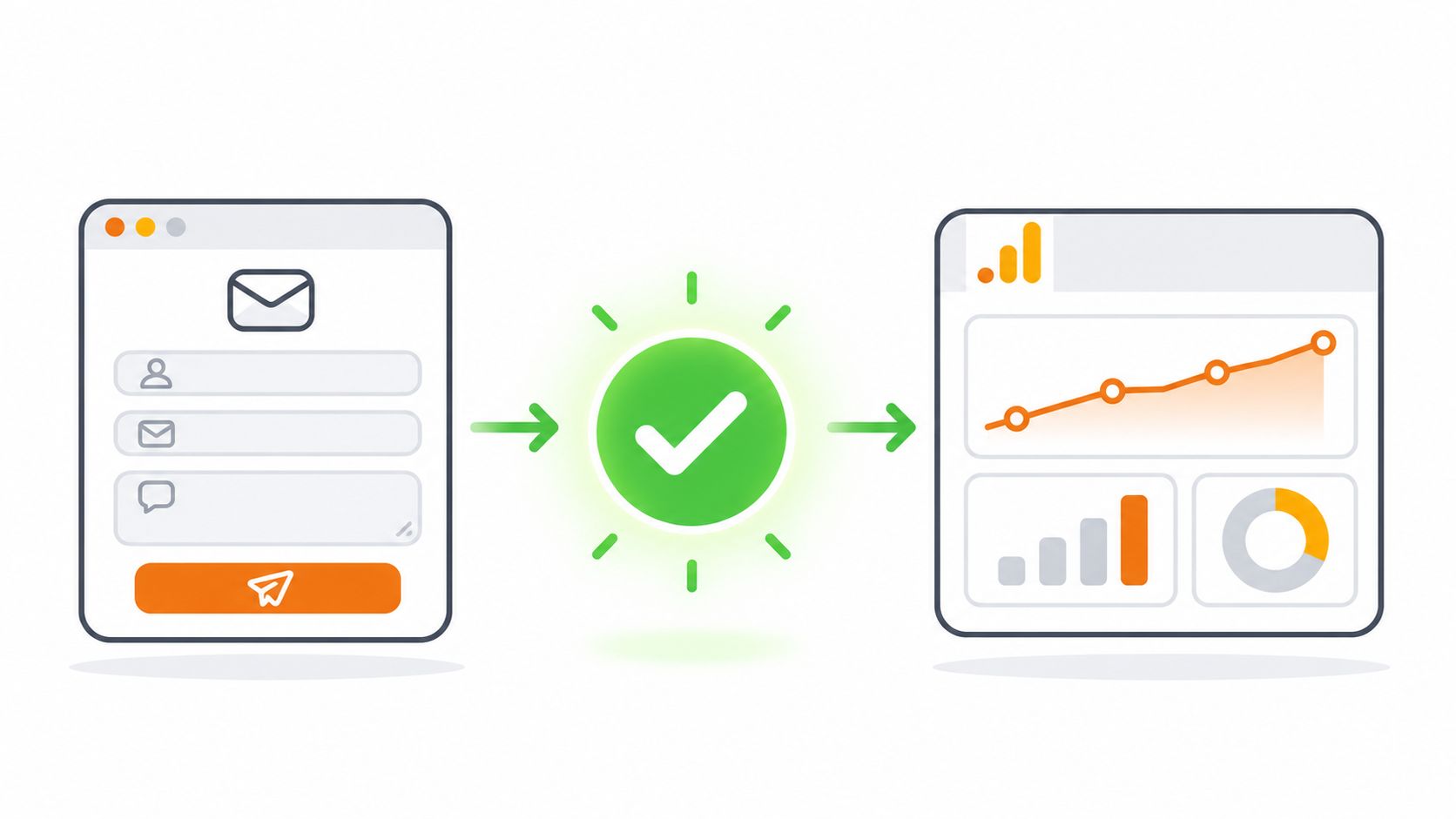
A completed enquiry is the closest thing to a lead GA4 can see on its own. Mark it as a key event, the name Google gave to conversions in 2024, and every report in the property can count it. Google's guidance on key events describes an important action such as a completed contact form, a tracked telephone click or a quote request, and shows where administrators review the reporting attribution model and key-event lookback window under Admin, Data display.
Set the event to fire once, on success. Use the recommended generate_lead event, or form_submit, sent when the visitor reaches a confirmation page or the form returns a success response. Fire it on the button click and failed validation attempts get counted as leads for the rest of the year.
Analytics adoption isn't the bottleneck. OECD research on SME technology adoption in the United Kingdom reports that a 2024 survey of 373 UK firms found more than 40% had invested in data analytics. Plenty of firms own the tool. Fewer have agreed what the event means.
What the event should carry
Parameters do the work page views can't. Pass service category, location page, landing page, device and first user source/medium with each enquiry, so one month can be cut by service and by town. Say a Leeds plumbing business records 18 generate_lead events and 11 arrive on the Organic Search channel. That split justifies refreshing two service pages. The raw monthly total on its own doesn't.
- Test in Realtime: submit every form yourself and confirm the event appears with the parameters you expect.
- Keep personal data out: names, email addresses and phone numbers in event parameters breach GA4 policy and UK GDPR principles.
- Retire dud events: review key events monthly and remove any that don't reflect a genuine enquiry.
2. Organic Search channel and landing page attribution
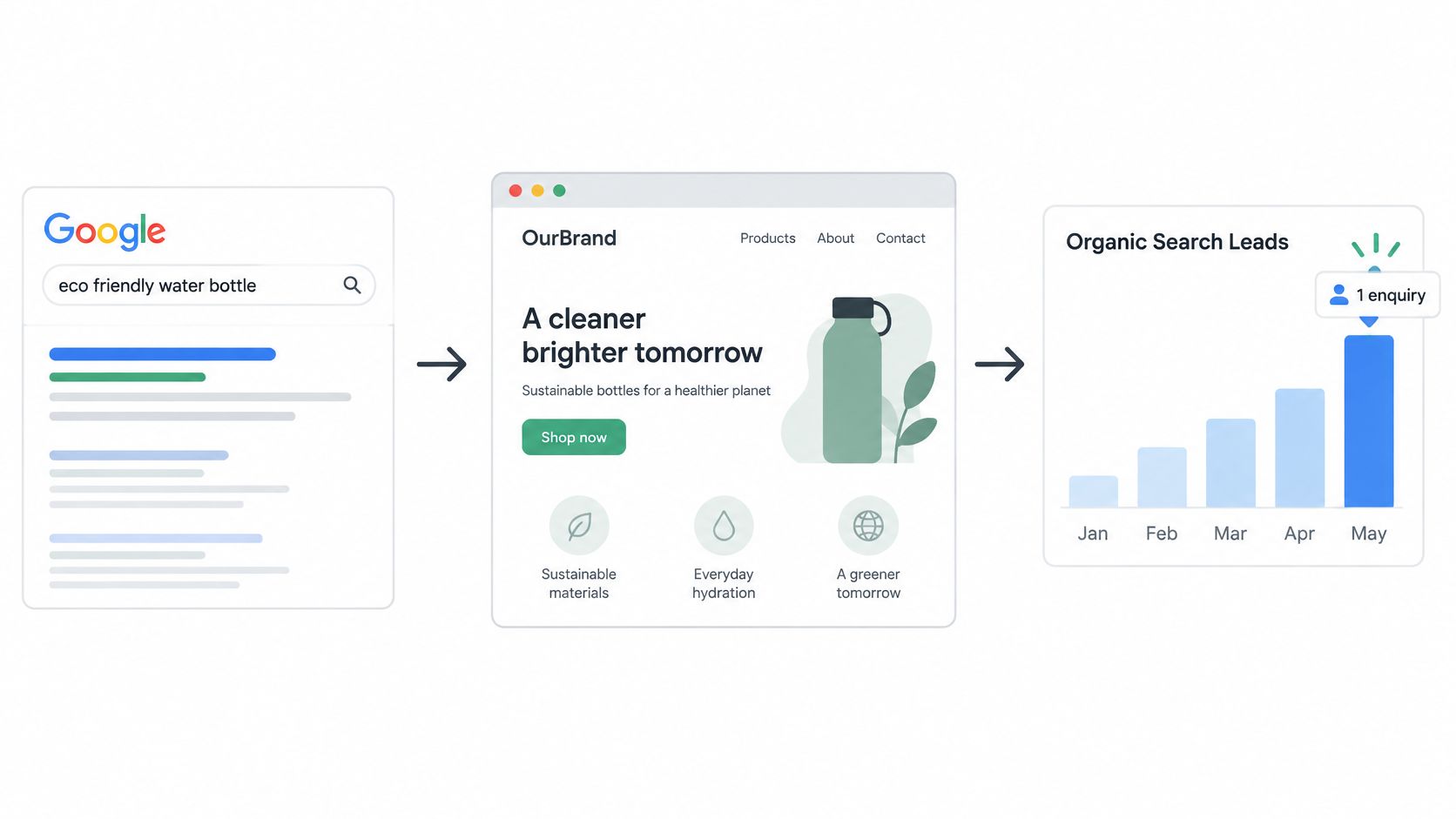
A landing page can attract readers without producing enquiries. Compare it with the Organic Search channel to see whether a guide published in March is generating key events, rather than just visits.
In GA4, Traffic acquisition groups sessions into channels such as Organic Search. The landing page report shows where each session began. Build a free-form exploration with Session default channel group, Session source/medium, Landing page and Key events as columns. Filter to organic to focus on search traffic.
How attribution models change the picture
Google's explanation of attribution in Analytics describes attribution as assigning credit across ads, clicks and other touchpoints in a user's path, using rules or a data-driven algorithm. First-click, linear, time-decay and position-based models were removed in November 2023, so older tutorials may show menus that no longer exist. Record the attribution model and lookback window in each SEO lead report. Otherwise, a setting change can make month-to-month comparisons misleading.
Cookie choices also affect what GA4 reports. When visitors decline analytics cookies, Google can estimate some metrics from comparable consenting users. Its documentation on behavioural modelling sets eligibility at 1,000 daily events with analytics storage denied for seven days and 1,000 daily users with analytics storage granted for seven of the previous 28 days. Users, sessions and key-event rates can be modelled. Page views and session starts cannot.
A York estate agent's guide to selling a terraced house produces three times the key events of its homepage. That points to a content opportunity, such as expanding the guide into a short series. Check the attribution model and lookback window before using the ratio to support a decision. The figure reflects the credit rules applied, not a direct count of enquiries caused by that page.
- Compare models before concluding: data-driven and last-click attribution can rank two pages differently in the same month.
- Filter organic, then note what is excluded: other search engines appear in the data. Someone who searches for your brand, leaves, then returns directly will not appear as an organic session on that return.
- Review monthly: relate changes in page-level key events to content or technical work, and account for seasonality before drawing conclusions. Use this measure to prioritise pages for investigation, not to claim that a page alone generated every enquiry.
3. Phone call and email click tracking
For trades and clinics, forms may be only one route to an enquiry. A visitor on a phone may tap a number or email link instead, and GA4 does not track tel: and mailto: links as events by default. That leaves a gap between website activity and the ways local customers try to get in touch.
In Google Tag Manager, create a Click - Just Links trigger filtered for link URLs containing tel: or mailto:. Use it to send GA4 events named click_phone and click_email. Mark a phone click as a key event only if it fits your enquiry definition. A tap shows intent. It does not show a conversation.
Practical rule: report phone clicks as enquiries only when you can match them to your call log. Click data can show which pages prompt contact attempts, but it cannot establish that a call was answered, qualified or turned into revenue.
A Bolton electrician found most organic phone clicks came from mobile visits to its emergency repairs page, with few from the contact page. Moving the number higher on the emergency page is a testable change, but click counts alone cannot show whether it generated more booked work.
- Name events clearly:
click_phoneis easier to identify in a report thanevent_47. - Retest after redesigns: changes to headers, sticky bars and footer contact blocks can break tracking.
- Pair clicks with call records where budget allows: a call log or call-tracking service can help connect a tap to a conversation and booking. Check the method for accuracy and privacy before relying on it.
Local visibility and phone tracking answer different questions. Local SEO for tradespeople in Oldham covers the visibility side; these events show which tracked contact links visitors use. Neither measure alone proves that a lead became a customer.
4. Search Console integration for query-to-lead analysis
An Oldham clinic's appointment page ranks for a treatment query with high impressions and almost no clicks. That points to a possible mismatch between the search result and the page, but it does not show whether enquiries are being tracked correctly.
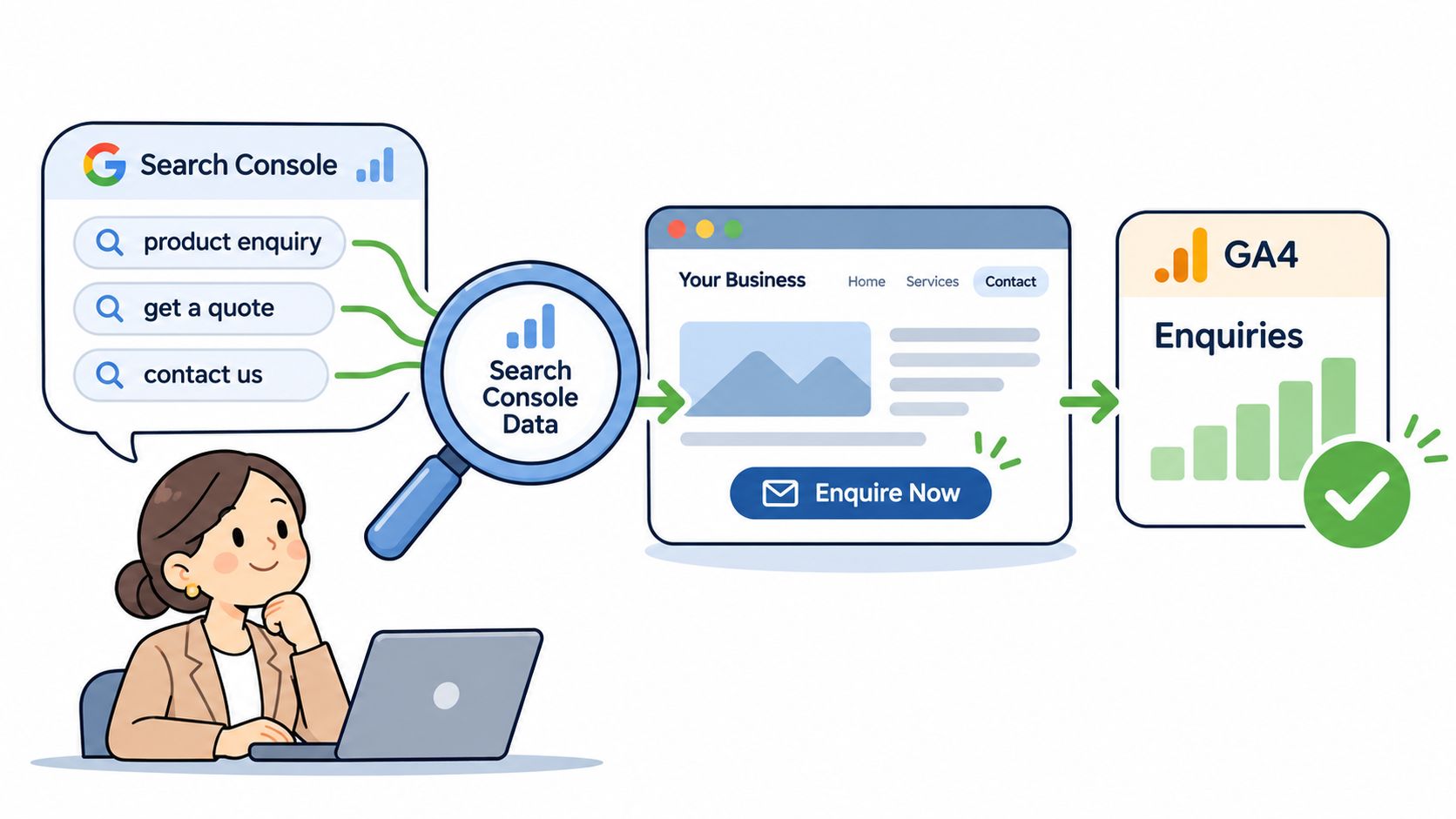
Search Console records what people searched before visiting. GA4 records activity on the site, including key events. Linking the accounts lets you compare queries and landing pages with engagement and enquiry events. It helps show which searches attract visits and which are associated with tracked enquiries, though the query-level figures are not a complete count of leads.
To connect them, verify the domain property in Search Console, confirm the account has the right owners and users, then link it under GA4 admin. Google organic search reports can then display query and landing-page data alongside GA4 engagement and key events.
Matching queries to pages
Prioritise service and location searches over general information queries. A Manchester accountancy practice might find that a search about self-assessment deadlines brings many impressions and some enquiries, while a search about changing accountants brings fewer impressions but a stronger enquiry signal. That comparison can help identify whether the deadline page needs a clearer call to action. It cannot prove that a specific query caused an enquiry.
Search Console restricts, samples and withholds some data for privacy. Treat query-level lead figures as directional, not exact. Check the Google Search Console SEO audit checklist for Leeds small businesses alongside your reports when reviewing organic pages. Do not set a target around one query alone.
- Match valuable queries to the pages that handle enquiries: if the page does not meet the searcher's need, improve the content or page experience.
- Use it to prioritise work. It will not audit tracking gaps: compare Search Console findings with GA4 key events before making decisions.
- Review the pairing regularly: query mix changes as you publish, so revisit old priorities rather than relying on a stale report.
The clinic's low click-through rate gives a reason to test a clearer title and align the page more closely with the treatment query. It does not reveal why searchers chose another result, or whether more clicks would produce more appointments. Measure the change against tracked enquiries as well as clicks.
5. Google Business Profile and local lead tracking
A Google Business Profile can generate calls, direction requests and website clicks, while GA4 records activity after someone reaches your site. The profile has its own dashboard, so its figures will not match GA4 totals. For trades, clinics, shops and service firms, those dashboard actions are useful signs of local interest, but they do not confirm that a call was answered or an enquiry became a customer.
Connect the listing to your analytics by adding UTM parameters to its website link. These short URL tags identify the source of a visit. Use a documented convention such as utm_source=google and utm_medium=gbp, with a campaign value that identifies the listing. GA4 can then report visits from the profile separately from other organic traffic. This shows what happened after a website click, not what happened to calls made directly from the listing.
A Sale hair salon tagged its profile link and found listing bookings peaked on weekday evenings. That result gives the owner a practical reason to review the opening-hours message on the profile and test a later booking cut-off. The tracking points to a pattern, but does not prove why customers booked then.
- Keep the convention consistent: using
gbpin one place andgoogle-businessin another splits the same source across reports. - Keep the listing accurate: categories, services and opening hours help customers assess whether the business meets their needs. Tracking cannot compensate for missing or outdated details.
- Read both dashboards monthly: profile actions indicate discovery, while GA4 key events show activity after a website visit. Together, they give a clearer view of local lead generation, though neither confirms lead quality on its own.
For practical guidance on improving the listing, see Google Business Profile optimisation for Manchester businesses.
6. AI search referral tracking
GA4 may record visits from AI answer tools as referral traffic, with sources such as chatgpt.com, perplexity.ai or copilot.microsoft.com. These visits can show that people are reaching your site through an AI answer, but they do not establish that the channel generates qualified enquiries.
Create a custom channel group with a session-source regex matching the referral domains in your own reports. Avoid copying a fixed list from another site, since platforms can change how they pass referrers. Review the rule periodically and update it when your reports show a new source.
Treat AI referrals as a monitoring line rather than a target. A handful of visits from one assistant shows interest, not demand. No one can promise a citation in an AI answer.
Check what those visitors read. For example, if a London dental practice sees visits from an AI tool landing on its guide to dental implant costs, that can prompt a review of the guide's clarity, pricing context and next step. A small number of sessions is a reason to inspect the content, not evidence that it will generate leads.
- Keep the channel separate: distinguish AI referrals from Organic Search to avoid blending the two sources.
- Use your own reports: include domains that appear in your acquisition data.
- Compare with branded search: review branded queries alongside AI referral visits. They provide another indication of interest, though neither measure alone confirms an enquiry.
For context on what can influence visibility in AI answers, read this guide to AI search. To see an approach to tagging ChatGPT visits and tracking signups, consult Chartsy's guide to ChatGPT-sourced signups.
7. Offline lead outcomes and lead value using CRM imports
A CRM import can show which enquiries became qualified opportunities or signed work, giving GA4 a stronger commercial signal than a website interaction alone. It helps trades, clinics, shops and service firms assess which organic pages attract enquiries that progress. It cannot prove that a page caused a sale, especially when a customer used several channels before getting in touch.
The Measurement Protocol sends events from your server to GA4. When a CRM lead reaches a defined stage, send an event with a pseudonymous lead ID and a value based on the average job, not the highest-value one. Start with three stages: enquiry, qualified and won. Keep the stages manageable so the data stays consistent.
Passing value back without passing personal data
Keep names, email addresses and phone numbers out of GA4. Use a pseudonymous ID, check the setup against UK GDPR requirements with the person responsible for your data, and label estimated values clearly in reports. A lead value is useful for comparing performance, but it remains an estimate unless it reflects actual recorded revenue.
The UK business data survey 2026 reports that 72% of UK businesses handling digital data analyse it: 64% internally and 8% through both internal and external analysis. It also notes that sole traders are less likely to analyse data than larger organisations, and that businesses using data can improve internal process efficiency. For your reporting, the practical test is whether website and CRM records can be reconciled.
The ICO guidance on storage and access technologies says consent is required when these technologies support online advertising, including campaign-effectiveness measurement. Consent settings can therefore limit what GA4 records. Show the observed figures alongside a reconciliation rate, rather than treating the GA4 total as every enquiry received. For example: “42 GA4 leads from organic search, 57 CRM enquiries, 74% digitally observable.”
An Oldham joinery firm assigns a £400 average value to quotes that become signed contracts, based on its own past jobs. If bathroom refurbishment pages generate more value than kitchen pages, that can inform where to investigate or allocate effort. The comparison is only as reliable as the stage definitions and value estimates behind it. If the CRM needs automation, browse HighLevel automation setup options. Where paid campaigns also run, Google Ads budgeting for London small businesses explains how to keep paid and organic figures distinct.
How the seven GA4 lead measures compare
The measures below are ranked by how closely they connect to a real enquiry. Higher-ranked signals show a completed business outcome; lower-ranked ones show discovery or intent. For trades, clinics, shops and service firms, the distinction helps keep activity counts separate from confirmed leads.
| Closeness to enquiry | Measure | What it proves | What it does not prove |
|---|---|---|---|
| 1. Closest | Offline lead outcomes and lead value using CRM imports | Whether enquiries became qualified leads, sales or recorded value | Whether every outcome is attributed accurately to SEO |
| 2. High | Key events for enquiry forms and thank-you pages | A tracked form submission reached the recorded completion point | That the enquiry is genuine or suitable |
| 3. High | Phone call and email click tracking | A visitor clicked a contact link | That a call connected or an email was sent |
| 4. Moderate | Organic Search channel and landing page attribution | Which organic visits and entry pages received attribution for key events | That attribution captures every visit or identifies the sole cause |
| 5. Moderate | Google Business Profile and local lead tracking | Profile actions and tagged visits indicate local engagement | That profile actions and GA4 website events represent the same leads |
| 6. Early signal | Search Console integration for query-to-lead analysis | Search queries and landing pages can be considered alongside GA4 key events | A complete query-level record for every enquiry |
| 7. Early signal | AI search referral tracking | Recorded referral visits and key events indicate activity from AI sources | The full extent or business impact of AI-driven discovery |
The ranking reflects closeness to a recorded enquiry, not how useful a measure is in every case. CRM outcomes are closest to business value, but depend on reliable matching and imports. Form completions are direct signals, while contact clicks and traffic attribution show intent or association rather than a completed enquiry. Search Console and AI referrals add discovery context, but cannot confirm lead quality on their own. Treat each measure according to what it records, and avoid adding unlike signals into one lead total.
Turn Enquiry Counts into Decisions You Can Trust
The sensible order is the order in this list. Ship key events and a landing page exploration this month, because both are free and both answer the question that started the conversation. Add call tracking when you can retest it after each site change. Link Search Console when you want query intent in the same view. Add CRM values when your sales process is stable enough to send them, not before.
Agree the definition first. A newsletter sign-up, a brochure download and a callback request are not the same lead, and a report that adds them together flatters everyone and informs nobody. Write the definition down, put it beside the figures, and apply it for at least a full quarter before changing it again.
Then review on a fair period. Three months is usually enough to spot direction in a local market. One strong week after a bank holiday isn't. Keep a short note of what changed in that period, the content published, the tracking altered, the campaign launched, because a figure without context invites the wrong conclusion.
Where a number is estimated, say so in the report. Where a gap is unmeasurable, name it. A lead count with a stated reconciliation rate earns more trust than a round figure nobody can trace back to anything.
None of this needs a data team. It needs one person to own the definition, one afternoon to test every form and phone link, and a monthly habit of reading the analytics beside the CRM. Do that and SEO stops being a traffic conversation. It becomes a conversation about enquiries, quotes and signed work, which is the conversation the business wants to have.
Measurement also sharpens the questions you ask of anyone doing the work. A firm that can show which pages produce qualified enquiries can challenge scope with evidence, and it can spot a plan drifting before a quarter is wasted. Google Ranker Pro's Growth SEO plan includes conversion tracking and a strategy call, so the measurement sits inside the retainer rather than beside it. You can request a free audit or discuss requirements through the audit enquiry form before choosing anything.
Google Ranker Pro works with small and growing businesses across Manchester, Oldham, Leeds, York and London on SEO, Local SEO, Google Business Profile optimisation, AI search visibility and Google Ads. If your reports show traffic but you can't yet say which pages produce enquiries, the team can review your tracking, agree what qualifies as a lead and build reporting you can act on. Visit Google Ranker Pro to see how the services fit together and start that conversation.