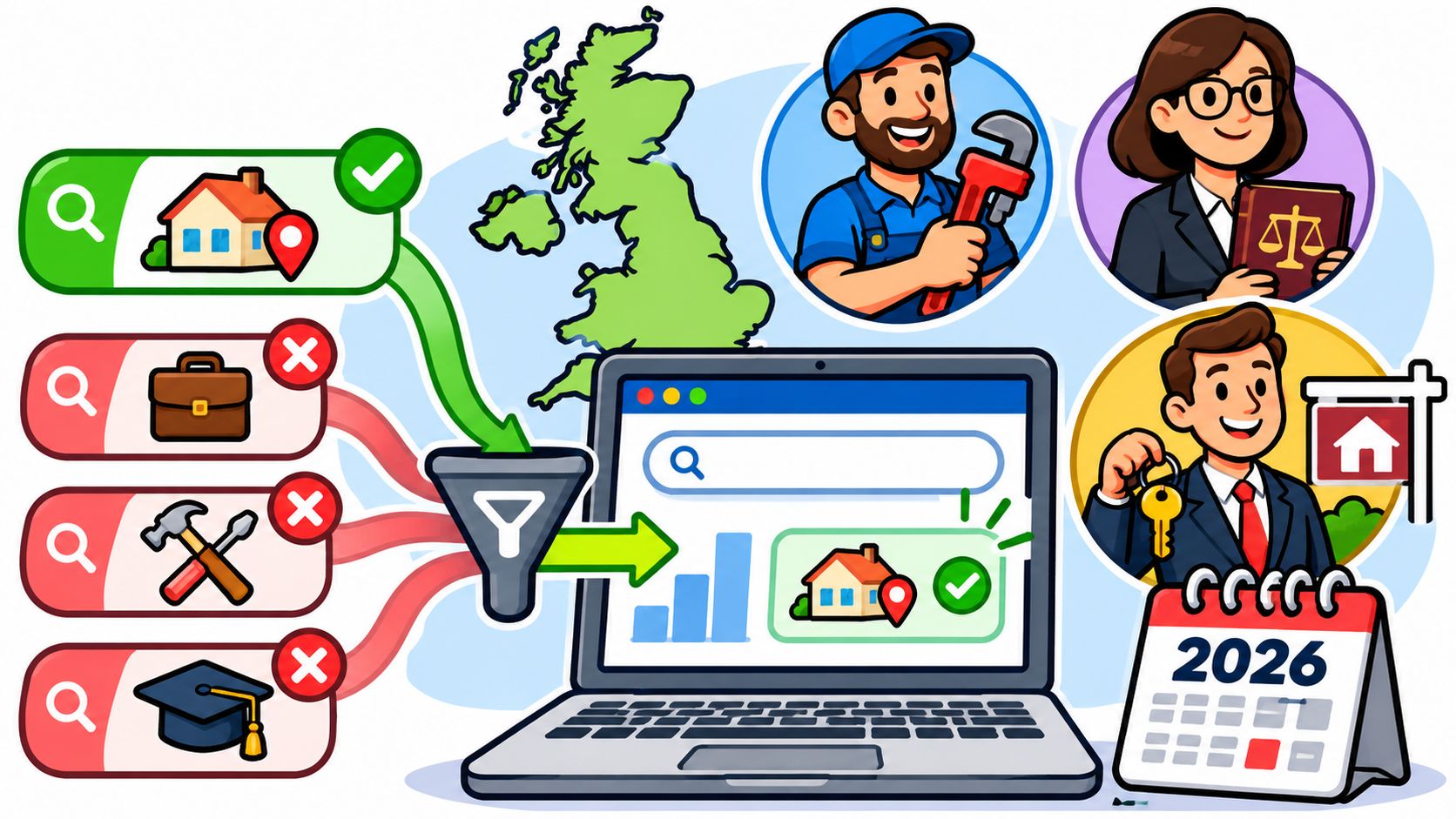

Most search marketing advice boils down to a neat slogan: run Google Ads for quick wins, invest in SEO for the long term. That rule of thumb fails SEO vs Google Ads for Salford service businesses because it ignores two realities that determine whether a campaign puts money in the bank. First, a channel only works if your profit per completed job covers what it costs to acquire a booked customer, not merely a click or a page-one ranking. Second, local search isn't just about website visits anymore, because customers routinely call straight from Google Maps without ever opening a landing page.
Paid search in the UK is far too large and competitive to treat as a casual side experiment. According to the Advertising Association and WARC UK adspend report, UK search advertising including retail media reached £16.9125 billion in 2024, up 12.8% from £14.995 billion in 2023. That scale proves buyers actively use search adverts to hire local trades, solicitors, clinics and property firms, yet it also means you're bidding in mature auctions where weak margins or sloppy tracking drain budgets fast. Choosing the right channel starts with your urgency, your close rate, and how customers contact you.
Which Channel to Lead With for Your Business
Lead with Google Ads when customer demand is urgent or your job margins comfortably support immediate paid enquiries. Lead with SEO and Local SEO when buyers plan ahead, compare quotes over days or weeks, and generate repeat local demand throughout the year. Putting the wrong channel first either burns cash on clicks that can't pay for themselves or leaves the phone silent while organic pages take months to climb.
Three distinct mechanisms sit behind that choice, and each operates on a different commercial clock. Google Ads places your business into real-time keyword auctions, so calls and form submissions can start within days of launch, yet visibility stops the moment you pause spend. Competition inside those auctions keeps tightening too: IAB UK's Digital Adspend 2024 research recorded total UK digital advertising at £35.5 billion in 2024, up 13% year on year, with search holding 47% of the market at £16.6 billion.
SEO solves a different commercial problem by building unpaid visibility across dedicated service pages through useful content, clean technical foundations and relevant local links. It typically takes several months to gain traction, though well-built pages keep attracting enquiries without paying for every click. If you're weighing how paid auctions interact with organic rankings, this guide to the difference between SEO and SEM sets out the boundary cleanly. Local SEO and your Google Business Profile sit between the two timelines, often lifting map-led calls and direction requests within weeks to months.
UK search marketing agencies specialising in SEO, AI SEO, Google Ads and Local SEO generally match organic tiers to market pressure. A Local SEO plan targets visibility in a defined local area, a Growth SEO plan expands organic reach across wider service queries, and an Authority SEO plan tackles heavily contested markets where established firms already dominate.
How Salford Trade and Service Scenarios Split
Different service models buy attention in completely different ways. Match your typical customer journey to the row that best reflects how jobs land on your calendar.
| Business situation | Lead with | Support with | Why |
|---|---|---|---|
| Emergency trades (plumbing, locksmith) | Google Ads with tight locations and call handling | Business Profile for organic calls | Urgent intent converts quickly |
| Planned repeat jobs (roofing, kitchen fitting) | SEO on service pages and Local SEO | Small Ads test on proven terms | Demand builds over months |
| Professional practices (solicitors, accountants) | SEO on practice-area pages | Ads for high-value terms once margin is confirmed | Considered decisions reward trust content |
| Restaurants and visitor venues | Business Profile and Maps discovery | Ads for events or openings | Map and photo discovery drives visits |
| Estate agents and property | Local SEO with area pages | Listing-specific Ads for quick exposure | Area searches repeat; listings need speed |
Consider two hypothetical Salford scenarios to see why channel order matters. First, take a hypothetical emergency plumber operating in Salford whose customers search the moment a pipe bursts under a kitchen sink. Those homeowners aren't reading long guides or waiting three days for a callback; tight postcode targeting in Google Ads paired with immediate phone answering captures urgent work straight away, while an accurate Business Profile steadily builds unpaid call volume alongside it.
Now compare a hypothetical roofing firm serving Salford and Trafford whose customers spot slipped tiles or plan a full re-roof, then gather three quotes over several weeks. Bidding aggressively on broad roofing terms from day one can eat heavily into margin while prospects sit on quotes. Leading with clear service pages and strong local map visibility captures those considered researchers without paying per click, while a tightly capped Ads test on specific repair phrases reveals which search terms turn into booked surveys.
Decision anchor: Urgency justifies paying per click; considered research rewards building pages and local profiles that stay visible all year.
AI-generated search answers increasingly pull from those exact same foundations, drawing on clear, accurate service pages and verified business profiles to summarise local options. Strong fundamentals help your business appear accurately when prospects use AI summaries, though no agency or platform can guarantee an AI citation. Identify the row in the table above that matches your urgency and job margin, then stress-test whether paid clicks fit inside your unit economics.
Measure Calls, Bookings and Profit Separately
A campaign that doubles website visits while delivering tyre-kickers outside your service area loses money. A quieter month generating twelve qualified phone enquiries can fill your schedule. Judging either channel on clicks, impressions or raw keyword positions is the fastest way to misallocate budget, because the only decision metrics that hold up across both paid and organic search are cost per qualified enquiry and profit per booked job.
Consent rules make careful measurement harder for smaller UK advertisers. Under Google's conversion-modelling guidance, Consent Mode modelling requires at least 100 ad clicks per day, per country and domain grouping to estimate journeys lost when UK or European Economic Area visitors decline cookies, recovering on average more than half of those unconsented conversions once eligible. Most local service budgets never come close to that eligibility line. As a worked example, a £400 monthly budget at £3 per click buys roughly 130 clicks across an entire month, against a threshold that demands 100 clicks every single day. If your spend sits anywhere near that scale, assume your Ads dashboard is missing part of the picture rather than expecting automated modelling to repair it.
Tag configuration adds a second layer of friction. Google's Consent Mode documentation specifies that the ad_user_data consent signal is required for enhanced conversions and tag-based conversion tracking. When a cookie banner, website tag and telephone log aren't aligned, Google Ads can undercount genuine enquiries while organic analytics reports a completely different picture. Putting clean event tracking in place first, using a structured setup for measuring SEO leads in GA4, stops channel comparisons from turning into guesswork.
Raw enquiry totals still hide lead quality. Spam submissions, wrong postcodes and out-of-scope requests inflate both channels equally, and a form fill from someone outside your service area costs the same to track as a genuine booking while producing nothing. Separating real sales conversations from casual calls is much easier when you define clear screening criteria, a process well illustrated by automated qualification explained by Dial Milo. Reconcile every phone call and web form against your CRM or call sheet so paid and organic channels are judged on real pipeline rather than form noise.
One measurement detail matters more than any other for local firms. A large share of customers dial straight from the map result without ever visiting your site, so website analytics alone will systematically undervalue your Business Profile and overvalue channels that generate clicks. Track map calls as their own line, or you will compare channels on incomplete evidence.
A Five-Column Monthly Reporting Checklist
Keep reporting simple enough that you'll review it every month without drowning in vanity charts. Build one shared spreadsheet that tracks both channels identically:
- Log calls, forms and booked jobs separately: Match every tracked telephone call and website submission against your diary, invoice ledger or CRM so missed calls and cancelled quotes don't inflate conversion rates.
- Record Google Business Profile interactions: Track direct phone calls, direction requests and website clicks straight from profile insights, because a large share of local customers dial you from the map result without visiting your site.
- Track organic commercial progress realistically: Monitor impressions and rankings for core service terms alongside organic enquiries and revenue-assisted conversions, without chasing promises of fixed page-one positions.
- Standardise on five columns: List channel, enquiries, qualified enquiries, booked jobs and profit per job side by side each month so every pound spent faces the same test.
That final column does the core work. Two channels can produce identical enquiry counts while one delivers £90 profit per booked job and the other delivers £400, because the jobs themselves differ in value. Review the sheet quarterly rather than every few days: daily fluctuations in ad clicks or search impressions are noise, while ninety days of reconciled bookings show where profitable work originates.
Work Out the Break-Even Cost per Lead
The first number to know is not cost per click. It is the most you can pay for one qualified enquiry before the job stops paying. A national click average tells a Salford electrician, roofer or solicitor very little on its own, because job profit, close rate and call quality change the economics. A £5 click can be cheap on a high-margin job. A £1 click can be expensive if most enquiries never become paid work.

Use this four-step model with numbers from your own last twenty completed jobs:
- Calculate gross profit per completed job. Take your average invoice value and subtract materials, direct labour, subcontractor costs, waste disposal and realistic travel time. Revenue is not margin. Only the amount left after direct job costs can pay for overheads and marketing.
- Estimate your true close rate. Divide booked, paid jobs by the total number of qualified enquiries you spoke with or quoted. Include missed calls and quotes that went quiet. An optimistic close rate inflates your ad ceiling on paper and drains cash in practice.
- Multiply gross profit by close rate. That figure gives your maximum affordable cost per lead before deducting fulfilment overheads and marketing management fees. UK Google Ads cost guidance from PPC Geeks states that typical Search CPC sits around £1 to £4, with a £300 to £600 monthly test budget wasted when landing pages, tracking and telephone handling are weak.
- Compare your ceiling against realistic click and conversion costs. Breeze Development's 2025 UK Google Ads cost guide reports UK Google Ads cost per click from £0.50 to £5.00 in 2025 depending on industry and keyword competitiveness. If ten clicks produce one qualified enquiry at £3 per click, your media cost per lead is £30 before management fees. If twenty clicks are needed at £5 each, that single enquiry costs £100 in click spend alone.
Hypothetical Break-Even Ceilings by Job Type
The figures below show how quickly your affordable cost per lead drops as close rates tighten. Every number is a hypothetical example before deducting fulfilment and marketing overheads.
| Hypothetical job (gross profit before overheads) | Close rate | Maximum cost per lead |
|---|---|---|
| £150 emergency call-out | 30% | £45 |
| £400 repair or installation | 25% | £100 |
| £600 electrical job | 20% | £120 |
| £1,200 legal matter (gross margin) | 10% | £120 |
The bottom two rows matter. A hypothetical £1,200 legal matter closing at 10% carries the same lead ceiling as a £600 electrical job closing at 20%, yet legal keywords often cost more per click because the value of the work attracts more competition. That gap is where profit leaks. A high invoice looks attractive, but a low close rate and costly clicks can leave less room than a smaller, faster job. Seeing how budget maths scales across different UK markets is easier when you walk through how small businesses structure Google Ads budgets alongside your own close-rate records.
Fixed retainers sit differently in cash flow than auction spend. For reference, Google Ranker Pro offers a Local SEO plan at a 2026 monthly guide rate of £747 per month for local service businesses. Google Ads and Meta Ads are not included in SEO plan prices and require a separately agreed scope, management fee and media budget. Putting both fee structures next to your break-even table makes the commercial trade-off clearer: one cost buys an agreed ongoing programme, while paid search spend rises and falls with clicks, competition and the quality of your enquiry handling.
If your break-even ceiling sits below the cost per lead you can realistically buy in paid search, lead with SEO and reserve Google Ads strictly for controlled tests.
Set Up Your Google Business Profile for Local Demand
Even if you never run an advert, your Google Business Profile often acts as your primary shopfront for local customers. According to Google's local ranking documentation, unpaid local positions are mainly determined by relevance, distance and prominence/popularity, and businesses can't pay Google for a better organic local placement. Complete, accurate profiles are more likely to appear when someone searches for a nearby trade or practice.
That map layer accounts for far more buyer behaviour than traditional website-only comparisons admit. UK local-search figures published by Rank My Local report that 70% of Google Business Profile views come from Google Maps and 84% of discovery searches use a category, product or service rather than a specific business name. Most prospects aren't typing your company name into Google; they're searching a service category on Maps, scanning ratings and photos, and tapping the call button straight from the listing.
Six Steps to a Compliant Salford Business Profile
Getting the setup right avoids costly suspensions and ensures your profile surfaces for the jobs you want. Work through these six steps in order:
- Declare premises or a service area accurately. Businesses that travel to customers without a staffed, customer-facing office shouldn't display a home address or a rented mailbox as a shopfront. Following Google's Business Profile guidelines keeps a service-area tradesperson covering Salford, Trafford or Eccles compliant while matching searches across those real operating areas.
- Claim and verify one profile per business. Google's eligibility rules generally allow only a single profile for each business. Creating duplicate listings or invented town-centre addresses risks profile suspension, wiping out organic map calls overnight.
- Choose an exact primary category and supporting secondary categories. Because most local discovery comes from service and category searches rather than brand names, your primary category carries heavy relevance weight. Pick the single category that reflects your core revenue driver, then add secondary categories only for services you deliver.
- Complete every service, hour, photo and coverage detail. Add clear service descriptions, accurate opening hours, a reliable local telephone number and real photos of your work, vans or premises, clearly listing areas such as Salford, Trafford and neighbouring towns you cover. Detailed profiles give searchers immediate confidence to call while giving Google clearer relevance signals.
- Build a consistent, non-gated review process. Ask every customer for a review through the same simple follow-up message, never filtering invitations based on whether a client seems happy. Reply factually and politely to every review, including critical ones, because prospects read how you handle problems before picking up the phone.
- Track profile calls and direction requests alongside web enquiries. Record calls, route requests and website taps from profile insights each month so zero-click local demand is visible in your commercial reporting.
Businesses working across Greater Manchester can apply the same checklist regionally by reviewing Google Business Profile optimisation for Manchester businesses. Google Ranker Pro's services cover SEO, Local SEO, Google Business Profile optimisation, AI search visibility and Google Ads; as an independent agency not affiliated with Google, it works strictly within platform rules and never promises a guaranteed map position.
Which SEO Work Pays Off for Service Pages
A well-maintained Business Profile captures local map demand, yet your website still carries the weight for detailed service searches, quote comparisons and higher-value enquiries. The most common mistake local firms make is publishing dozens of near-identical location pages swapping out town names. Thin doorway pages irritate real visitors, split internal authority and rarely convert as well as one thorough page built for each genuine service you sell.
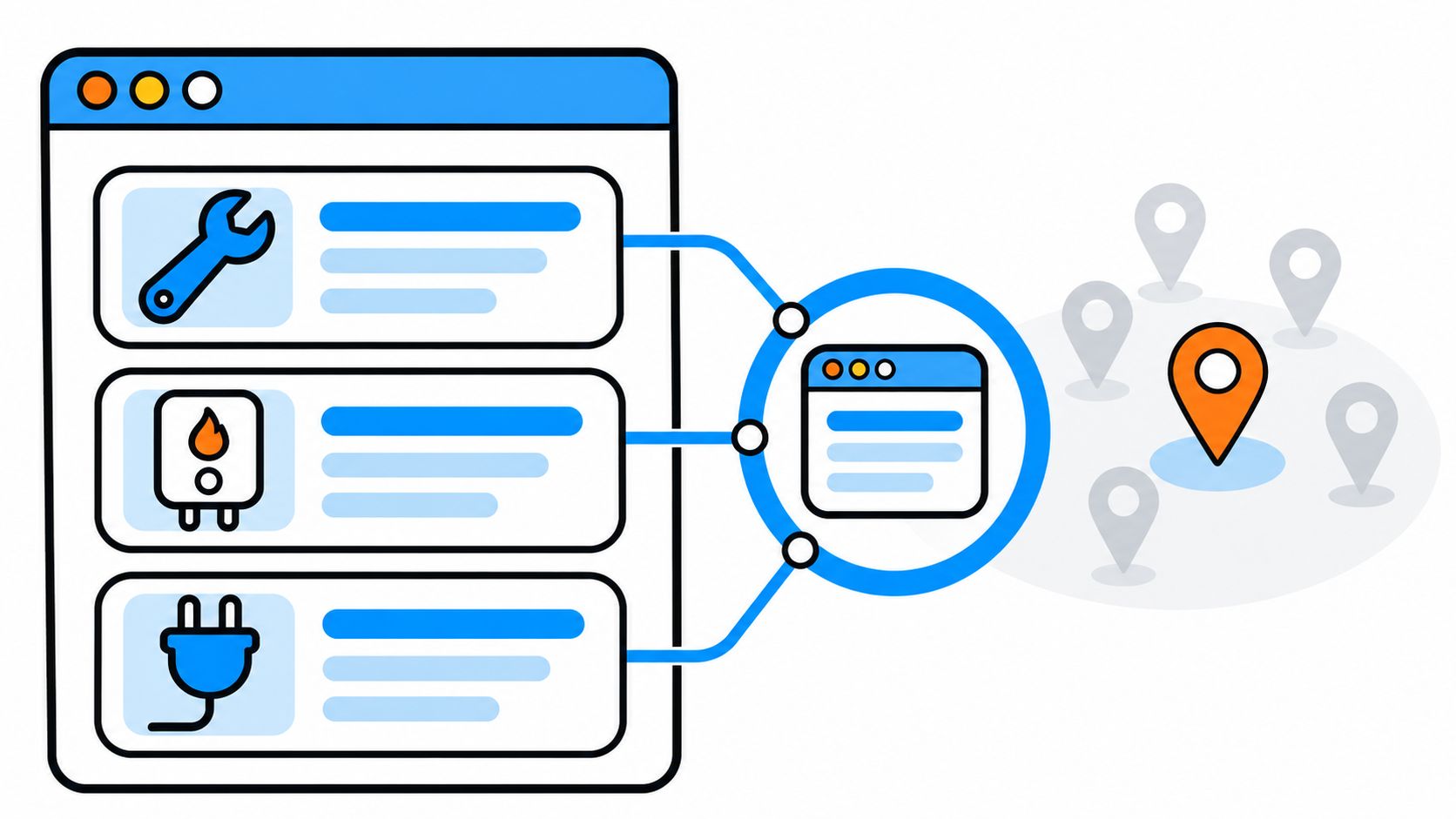
Prioritising SEO work from highest commercial impact to least urgent prevents months of busywork that never shifts enquiries. Start with on-page optimisation, which covers page titles and headings, internal links between related services, and the enquiry journey itself. A boiler repair page should state clearly what you fix, where you travel, what happens when a customer calls, and place a clickable phone number and concise enquiry form where mobile visitors see them immediately.
Next, clear away technical obstacles that stop search engines or buyers from using those pages smoothly. In plain terms, verify crawl access so Google can read and index your key service pages, trim oversized images so pages load rapidly on patchy mobile connections, and check that buttons and forms sit cleanly on phone screens without pinching or zooming. Fixing broken mobile layouts improves conversion rates for both organic visitors and paid ad clicks simultaneously.
With your site solid, tidy up citations and structured data. Keep your business name, address (or service area) and phone number identical across reputable UK directories where your business operates. Add structured data (schema markup, a small piece of code explaining page details to search engines) only where it truthfully matches what appears on the page, such as business contact details or clearly listed services.
Sector-specific content then builds depth where local customers look for reassurance. A Manchester restaurant earns stronger local engagement by publishing current menus, allergen and dietary information, and upcoming events on crawlable pages rather than buried PDFs. Likewise, an estate agent gains lasting authority by writing neighbourhood area guides grounded in sourced, verifiable market information rather than invented price claims. Tradespeople looking to adapt this structure to practical service pages can examine local SEO approaches for Greater Manchester tradespeople.
Finally, treat link work as reputation building rather than volume chasing. Start by reviewing links already pointing to your website, then identify realistic local outreach such as sponsoring a Salford youth club, joining a regional trade association or publishing a useful homeowner checklist. Good outreach targets appropriate local opportunities rather than trying to buy a promised ranking position.
Three Priorities Plus AI Search Fundamentals
When budgets and hours are tight, focus monthly effort where enquiry lift arrives fastest:
- Prioritise pages already earning impressions: Refreshing service pages that already sit on page two or the lower half of page one delivers commercial returns much faster than launching speculative blog posts from scratch.
- Fix the enquiry journey first: Adding clear response times, transparent callout policies and a short mobile contact form converts more of the visitors you already receive.
- Track edits on a monthly rhythm: Keep a short changelog of page updates, citation fixes and new local links so you can tie shifts in qualified enquiries back to concrete work.
Editorial filter: Write every service page to answer the exact questions a customer asks on the phone before booking, because helpful clarity serves human buyers, search engines and AI summaries alike.
Those same disciplined fundamentals now support AI search visibility. AI-generated answers pull facts from clear, accurate service pages, consistent directory profiles and verifiable business information. Keeping your pages structured, truthful and unambiguous gives AI systems reliable material to draw from, while staying realistic that no one can guarantee your business will be cited in any AI response.
Confirm Your Channel Mix Before You Spend
A sensible first channel is the one that can produce profitable completed jobs soonest, not the one with the most clicks. For Salford service businesses, that often means separating Maps-led discovery and phone calls from website traffic, then ranking the first ninety days in this order:
- Lead with the channel closest to booked work. If enquiries arrive through calls from local searches, prioritise the profile and service pages that support those journeys before adding more traffic sources.
- Use paid search to test commercial intent. Google Ads can put a service in front of active searchers, but it needs a separately agreed management fee and media budget. Use a negative keyword checklist for UK service businesses to keep irrelevant queries out before treating clicks as evidence.
- Keep organic work tied to service economics. SEO should strengthen the pages that match profitable jobs and the questions customers ask before booking, rather than chasing traffic that never becomes an enquiry.
- Review by profit per job, not channel loyalty. After ninety days, compare qualified enquiries, booked work and gross profit. The supporting channel earns its place only if it improves the economics of completed jobs.
Clean cost boundaries make that comparison easier to trust. Google Ads management and advertising spend are separate from SEO work unless expressly included in the proposal, so each channel should carry its own costs and stand on its own profit-per-job result.
Google Ranker Pro is an independent UK search marketing agency, not affiliated with Google LLC or Meta Platforms, Inc. It helps businesses weigh SEO, Local SEO, Google Business Profile optimisation, AI search visibility and Google Ads against commercial margins rather than vanity metrics. No channel can guarantee rankings, lead volumes or AI citations, so the decision is which mix you can measure, fund and improve with confidence. Request a free SEO audit or discuss your requirements via the Google Ranker Pro contact page.